
Fasting promises a lot: fat loss, cellular renewal, a longer life. Here is what the best evidence actually supports — how many hours, how many days, how many times a year, and where the popular claims outrun the science.
For most of history, flavor was a mystery you could taste but never see. Then a machine came along that could pull an aroma apart, molecule by molecule, and tell you exactly what it was made of — and in doing so it revealed something strange: two completely different sources can smell like the same thing because they carry the very same molecule.
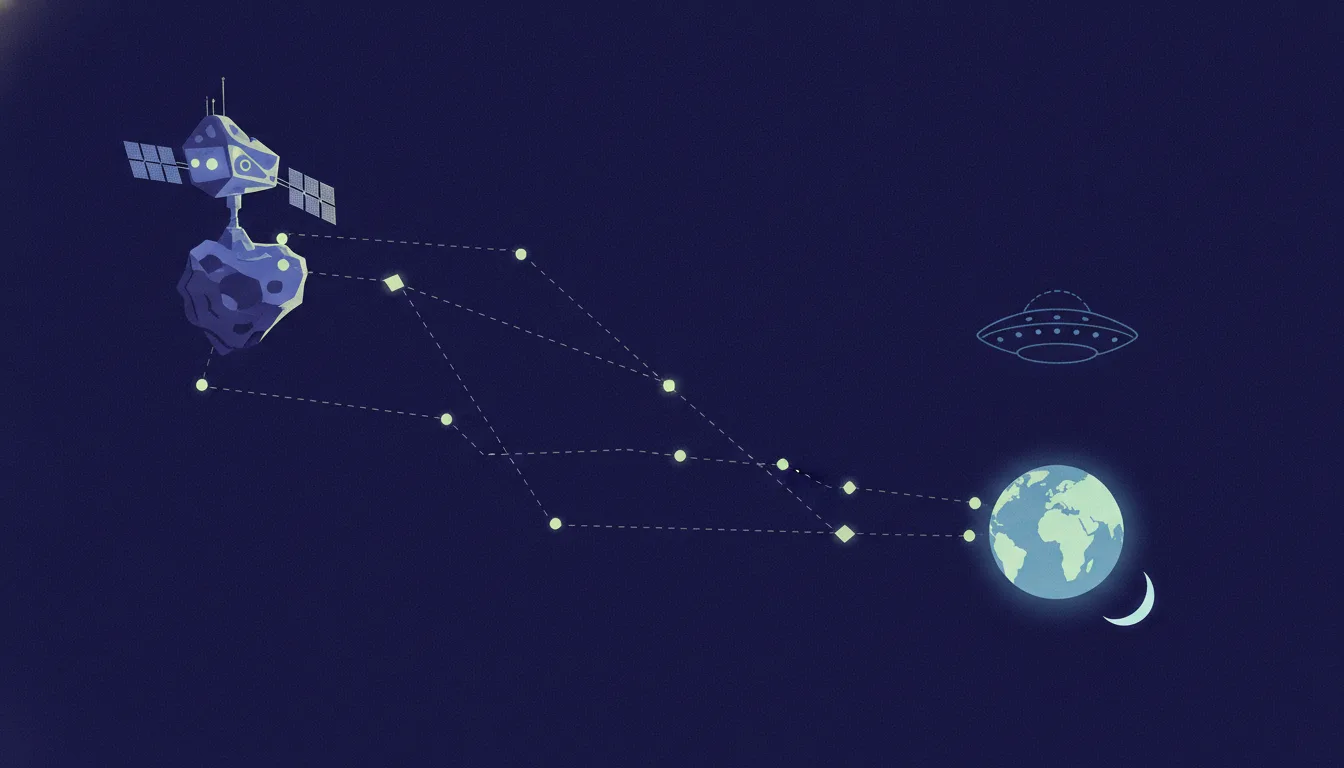
There's a question the physicist Enrico Fermi supposedly blurted out over lunch in 1950, somewhere between the soup and the punchline of a joke about flying saucers. The galaxy is old — around 13 billion years. It's enormous — hundreds of billions of stars, a large fraction with planets. Even at sluggish, sub-light speeds, a single expansionist civilization could colonize the whole thing in a few tens of millions of years. That's a rounding error on cosmic timescales.
When we think about advanced civilizations, we tend to imagine spaceships, floating cities, or omnipresent artificial intelligences. But in 1964, the Soviet astronomer Nikolai Kardashev proposed a far more elegant — and far more physical — way to classify a civilization's progress: the amount of energy it is able to harness.